Irrational: The Brushed Display Font Redefining Modern Design Aesthetics
In the vast ecosystem of typography, where serif traditions meet sans-serif minimalism, there exists a niche for fonts that dare to break the rules of perfect geometry. Irrational is one such typeface. It is not merely a collection of letters; it is a statement of intent. As a cool, brushed display font, it captures the raw energy of hand-painted signage and the refined precision of digital vector art. For designers, brand strategists, and creative entrepreneurs, understanding the nuances of Irrational can unlock new avenues for visual communication that feel both authentic and contemporary.
The Essence of Brushed Typography
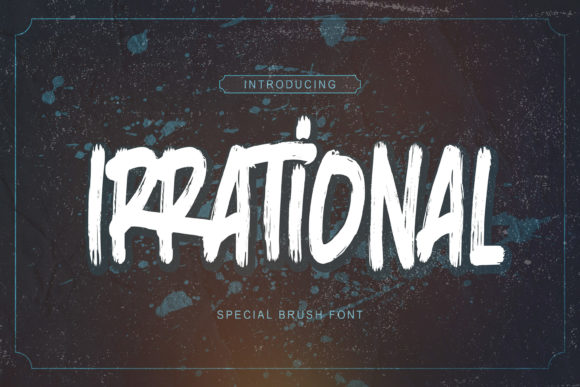
To appreciate why Irrational stands out, one must first understand the appeal of brushed typography. Unlike standard digital fonts that rely on uniform stroke widths and mathematically perfect curves, brushed fonts mimic the physical act of painting with a dry brush or a marker. This introduces texture, variation, and a sense of human touch. Irrational leverages this aesthetic to create a visual identity that feels organic yet bold.
The term "display font" indicates that this typeface is designed for large sizes—headlines, logos, and short bursts of text—rather than long paragraphs of body copy. Its character shapes are distinctive, often featuring tapered ends and irregular edges that suggest movement. When you use Irrational, you are not just choosing a font; you are choosing a mood. It conveys confidence, creativity, and a slight edge of rebellion, making it an ideal candidate for brands that wish to distance themselves from corporate sterility.
Key Characteristics and Visual Identity
What makes Irrational specifically suitable for modern design projects? Several key features define its utility:
- Textured Strokes: The brush effect provides a gritty, tactile quality that adds depth to flat designs.
- High Contrast Potential: It performs exceptionally well against solid backgrounds, allowing the white space to interact dynamically with the letterforms.
- Versatile Weight: While primarily a display face, its stroke width is balanced enough to remain legible in various contexts, from large banners to medium-sized headers.
- Modern Coolness: The aesthetic is undeniably current, aligning with trends in streetwear, urban culture, and minimalist advertising.
These characteristics make Irrational a powerful tool in a designer’s arsenal. It bridges the gap between the handmade and the digital, offering the warmth of the former with the scalability of the latter.
Practical Applications Across Industries
The versatility of Irrational extends far beyond simple graphic design. Its adaptability allows it to thrive in multiple industries, particularly those that value visual impact and brand personality. Let us explore where this font shines brightest.
Apparel and Sportswear Design
One of the most compelling use cases for Irrational is in the fashion industry, specifically within t-shirts and sportswear. Modern consumers, particularly younger demographics, gravitate towards clothing that expresses individuality. A plain t-shirt becomes a canvas for self-expression when adorned with bold, brushed typography.
For sportswear brands, the dynamic nature of the brush strokes mirrors the energy of athletic movement. Whether printed on a jersey, a hoodie, or a gym bag, Irrational adds a layer of intensity and motivation. Designers can experiment with layering the font over photographic elements or using it as a standalone graphic element. The key here is scale; because it is a display font, it demands space. On a chest print or a back panel, it commands attention without needing additional embellishment.
Branding and Logo Development
Creating a memorable logo is about distilling a brand’s essence into a single visual mark. Irrational is highly effective for logos, particularly for startups, creative agencies, coffee shops, and lifestyle brands. Its unique letterforms ensure that the brand name stands out in a crowded marketplace.
Consider a craft brewery or an artisanal bakery. These businesses often rely on perceptions of authenticity and craftsmanship. Using a clean, corporate sans-serif might feel disconnected from their values. In contrast, Irrational suggests a hands-on approach, a dedication to quality, and a willingness to be different. When integrated into a logo, it can serve as the primary wordmark, requiring minimal iconography to complete the visual identity.
Advertising and Promotional Materials
In advertising, capturing attention within seconds is crucial. Irrational excels in headlines and call-to-action statements. Its bold presence ensures that the core message of an advertisement is not lost amidst other visual clutter. Whether used in digital social media ads, print posters, or billboards, the font’s textured appearance draws the eye.
For example, a limited-time sale announcement for a streetwear brand can utilize Irrational to create a sense of urgency and exclusivity. The rough edges of the font can convey a "raw" or "unfiltered" vibe that resonates with audiences seeking authenticity. However, designers must exercise restraint. Because the font is visually loud, it should be paired with ample white space and simple supporting graphics to avoid overwhelming the viewer.
Evaluating Suitability: When to Use Irrational
While Irrational is a powerful design tool, it is not a universal solution. Understanding its limitations is just as important as recognizing its strengths. Here is a guide to evaluating whether this font is right for your specific project.
- Purpose of the Text: If the goal is to convey large amounts of information, such as in a brochure, article, or legal document, Irrational is unsuitable. Display fonts lack the readability required for long-form text. Reserve it for titles, headers, and short phrases.
- Brand Personality: Does the brand value tradition, stability, and conservatism? If so, a classic serif or a neutral sans-serif may be more appropriate. Irrational is best suited for brands that are energetic, modern, creative, or disruptive.
- Medium and Scale: Consider where the text will appear. On a small mobile screen, intricate brush details might become muddy if the font size is too small. Ensure that the font is used at a size where its textures and shapes remain clear and distinct.
- Visual Context: How does Irrational interact with other design elements? It pairs well with clean, minimal layouts and simple imagery. Avoid pairing it with other highly decorative or complex fonts, as this can create visual conflict and reduce overall clarity.
Pairing Strategies for Maximum Impact
To maximize the effectiveness of Irrational, consider pairing it with complementary typefaces. A common and effective strategy is to combine it with a simple, geometric sans-serif font for body text and subheaders. This contrast highlights the uniqueness of Irrational while ensuring that secondary information remains easy to read. For instance, a poster featuring Irrational for the main headline could use a light-weight sans-serif for the event details, creating a balanced hierarchy that guides the viewer’s eye naturally.
Conclusion: Embracing the Irrational in Design
In a digital world increasingly dominated by algorithmic perfection, there is a growing appreciation for the imperfect, the human, and the expressive. Irrational embodies this shift. It offers designers a way to inject personality, energy, and authenticity into their work. From t-shirts and sportswear to logos and advertisements, its applications are diverse and impactful.
However, like any powerful tool, it requires thoughtful application. By understanding its characteristics, respecting its limitations, and using it in contexts that align with its bold nature, creators can leverage Irrational to produce designs that resonate deeply with their audience. It is not just a font; it is a design philosophy that celebrates the beauty of the unconventional. Whether you are a seasoned professional or a business owner looking to refresh your brand, exploring the potential of Irrational may be the key to unlocking a more engaging and memorable visual identity.
For those interested in experimenting with this typeface, start by applying it to a single project—a social media post, a product label, or a personal logo. Observe how it interacts with your existing color palette and imagery. You may find that embracing the irrational leads to surprisingly rational and effective design outcomes.